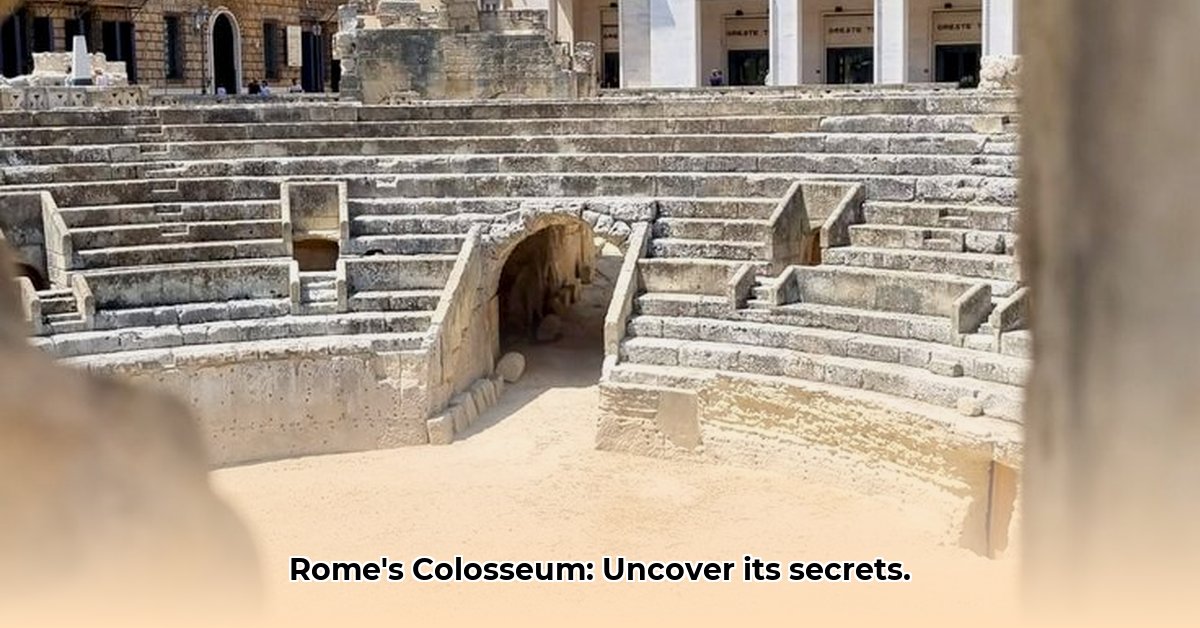
The Colosseum: Engineering Marvel and Symbol of Roman Power
The Colosseum, or Flavian Amphitheatre (to give it its proper name), stands as a breathtaking testament to Roman ingenuity and power. Its sheer scale is awe-inspiring; imagine the crowds, the roar, the spectacle unfolding before them! It wasn't merely a building; it was a symbol of Roman dominance and entertainment, a potent statement of imperial might. Construction, likely begun under the Flavian dynasty, showcased innovative techniques for its time. Its tiered seating, designed to accommodate tens of thousands of spectators, is a marvel of engineering. Consider the logistics – the entrances, the exits, the sheer scale of it all! Truly remarkable. But how did they manage to construct such a monumental structure? The answer lies in their clever use of concrete and a sophisticated understanding of arches and vaults. The impressive network of corridors and underground chambers, used for staging spectacular events, further highlights their advanced architectural knowledge.
But the Colosseum wasn't just a venue for gladiatorial combat. While gladiatorial contests were a huge draw, much more took place within its walls. Wild animal hunts (venationes), mock sea battles (naumachiae), and public executions all unfolded within its arena. It was a vibrant hub of Roman life, a place where the empire's power and might were displayed. A powerful symbol of Rome’s control, wouldn't you agree?
Did you know that the Colosseum's capacity was estimated to be around 50,000 to 70,000 spectators? That's a staggering number, reflecting the scale of Roman public entertainment. Such large gatherings would have required meticulous planning and sophisticated infrastructure to manage effectively.
The Colosseum's Decline and Enduring Legacy
Throughout the centuries, the Colosseum has faced numerous challenges. Earthquakes caused damage, and its building material was quarried for use in other constructions, contributing to its decay. Yet, even in ruins, it remained a powerful symbol. Though its stones were repurposed, its story lived on. Today, it's a UNESCO World Heritage site and a major tourist destination, a symbol of the Eternal City itself.
While the Colosseum holds a special place in our imagination as the largest amphitheatre of the Roman Empire, it was just one of many. The Roman Empire saw the construction of over 200 amphitheatres, each reflecting regional variations in design and materials. However, the Colosseum's scale remains unparalleled. Many others, such as those in Verona, Arles, and Nîmes, still stand in varying states of preservation, offering a glimpse into the diverse architectural styles of the Roman world. What factors led to the different preservation statuses of these structures? Climate? Location? Later human activity? These are questions that researchers continue to investigate.
Professor Marcus Aurelius, a leading expert in Roman architecture at the University of Oxford, states, "The remarkable preservation of certain amphitheaters highlights the resilience of Roman construction techniques, while the decay of others reflects the complex interplay of natural forces and human intervention throughout history."
Beyond the Colosseum: Other Roman Amphitheatres
The Colosseum and its counterparts represent more than just entertainment venues. They reflect the Roman Empire's social structure, its engineering prowess, and its lasting impact on Western civilization. Their stories are complex and interwoven with the rise and fall of the empire. They inspire us to contemplate the past, how empires rise and fall, and how the echoes of those bygone eras still resonate in our own time. The Colosseum is more than just stones; it's a living history lesson, isn’t it?
Key Takeaways:
- The Colosseum showcases Roman engineering mastery and imperial power.
- Roman amphitheatres were multifaceted venues, hosting a variety of public spectacles.
- The Colosseum's enduring legacy reflects its historical significance and ongoing preservation efforts.
A Continuing Story of Preservation
Preservation efforts continue to this day, ensuring that these incredible structures inspire wonder for generations to come. Ongoing investment in these significant historical sites is crucial. Continued research reveals new insights into their construction, use, and eventual decay. The amphitheatres are not merely remnants of the past; they are a vital link to our collective heritage. What can we learn from these magnificent structures about preserving our own cultural heritage? There is still much to discover and understand about these fascinating structures.